Hello! Today we will discuss interceptive orthodontics, also known as functional orthodontics 🦷⚡. This is a branch of dentistry that focuses on preventing dentoalveolar anomalies and deformities. Early diagnosis of eruption problems, occlusal anomalies, and detection of jaw growth abnormalities are extremely important to ensure easy and quick correction.
In cases of abnormal development, early interceptive measures can be taken (before all permanent teeth have erupted). These measures help create ideal conditions for the eruption of permanent teeth. An overly narrow upper jaw with a lateral crossbite, an advanced lower jaw, or a massive retrusion of the lower jaw can be painlessly treated during this developmental phase.
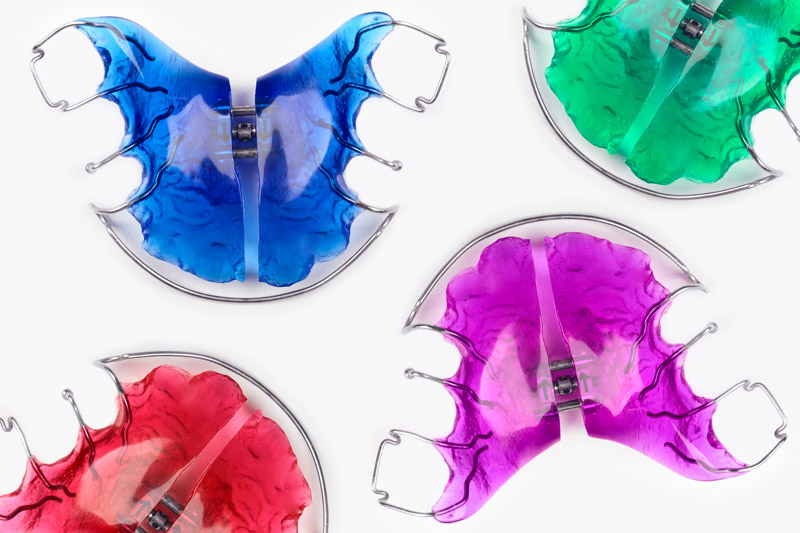
A technique or appliance is considered “functional” when it engages muscles without generating force on its own. Functional orthodontics utilizes the growth and development of the jawbone or the muscles of the mouth and mastication to guide teeth into correct alignment. Generally, if necessary, such an interceptive phase is carried out between the ages of 7 and 12.

Bad habits: pacifier, thumb sucking, tongue thrusting
The main enemy of orthodontists is thumb or pacifier sucking. These bad habits must be abandoned early, at the latest when the permanent teeth appear (6-7 years old). Otherwise, the position of the teeth and jaws may develop unfavorably and cause an open bite (malocclusion). Here is a video illustrating the deformation of the upper jaw and teeth caused by prolonged thumb sucking:
Mouth breathing and persistent infantile swallowing that follow can cause a plethora of health problems, such as Attention Deficit Hyperactivity Disorder (ADHD), sleep apnea, chronic fatigue, indigestion, etc.
Premature loss of primary teeth
The premature loss of primary teeth (mainly due to cavities) allows adjacent teeth to migrate into the free space not intended for them. Since primary teeth are space maintainers for the subsequent permanent teeth, no space should be lost. Therefore, in this case, the space must be maintained until the permanent tooth erupts using a dental space maintainer or a lingual arch. This is why systematic tooth cleaning and a healthy diet also help prevent the premature loss of primary teeth.


Functional crossbite
When the upper jaws are too narrow, unconscious gliding movements of the lower jaw to one side occur when clenching teeth. This can lead to irregular growth between the right and left halves of the lower jaw or inhibition of upper jaw growth. This can result in what is known as a “morphological crossbite” and even, later in adulthood, muscle and jaw joint problems (myoarthropathies). Such “functional crossbites” should be corrected very early, around 8-10 years of age.
Lower jaw retrusion
Massive retrusions of the lower jaw (distal occlusion) should also be treated before all permanent teeth erupt, ideally during the growth spurt. This is done using removable and/or fixed appliances, which helps create an ideal foundation for the permanent teeth. This so-called functional orthodontics takes advantage of the growth and development of the maxillary bone or the muscles of the mouth and mastication.
Class III malocclusions (prognathism)
In the case of reverse occlusion, the lower jaw is too far forward. It is possible to try to inhibit its growth very early. Unfortunately, in some cases, when lower jaw growth is excessive, prognathism can only be corrected after growth has finished, with the help of surgery.

Enlarged pharyngeal and palatine tonsils
While increased lymphatic tissue is normal in early years, very large pharyngeal or palatine tonsils can often lead to obstructed nasal breathing. The resulting unfavorable mouth breathing automatically causes a low tongue position, which negatively impacts tooth position and jaw growth. In exceptional cases, early tonsil removal is therefore advisable. The indication for early tonsil removal for orthodontic reasons is determined by the orthodontist in collaboration with the ENT specialist.
If you believe your child’s bite is not developing correctly, you can make an appointment with me at the practice by calling 022 732 50 00 or by clicking the link below. I would be happy to help you!