
Would you like to correct the color, shape, or alignment of your teeth without undergoing heavy treatment? Dental veneers are one of the most requested solutions in cosmetic dentistry. Thin shells bonded to the visible side of the teeth, they allow for a smile transformation in just a few sessions.
In this article, I present the different types of veneers available in Geneva, the prices practiced in Switzerland, the placement process, and the results you can realistically expect.
What is a dental veneer?
A dental veneer is a thin shell, generally made of ceramic or composite resin, custom-designed to cover the front surface of a tooth. Its thickness varies between 0.3 and 0.7 mm, which is barely more than a contact lens.
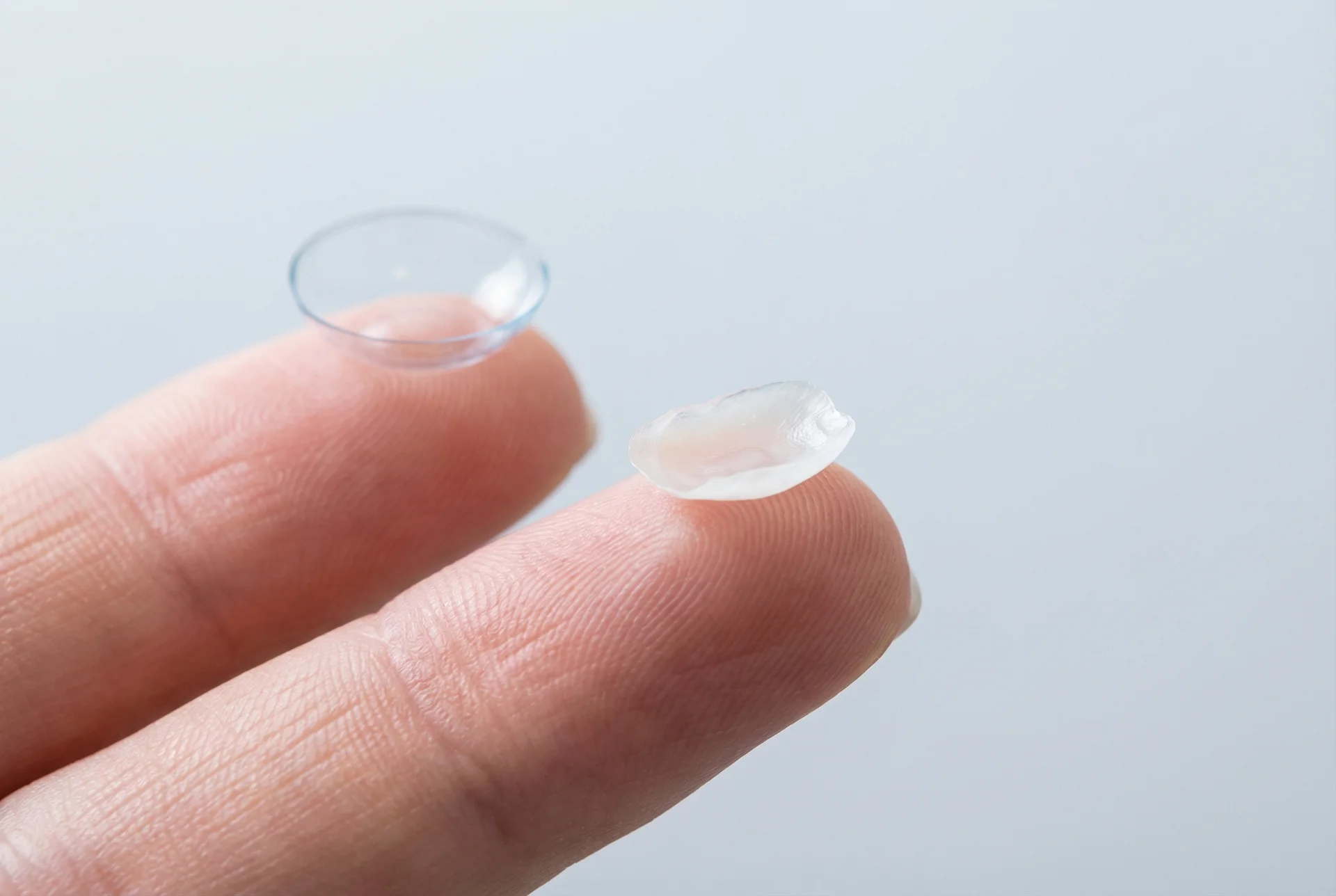
The objective is purely aesthetic: to modify the shade, shape, size, or apparent alignment of the teeth visible when you smile. Unlike a crown, the veneer does not cover the entire tooth. It is limited to the visible surface, which allows for the preservation of a large part of the natural enamel.
Veneers are mainly placed on the “smile teeth,” meaning the 6 to 10 most visible upper teeth (central incisors, lateral incisors, canines, and sometimes first premolars).
Types of veneers: ceramic, composite, and no-prep
The choice of material directly influences the aesthetic result, longevity, and price of your veneers. Here are the three main categories available in Geneva.
Ceramic veneers (porcelain)
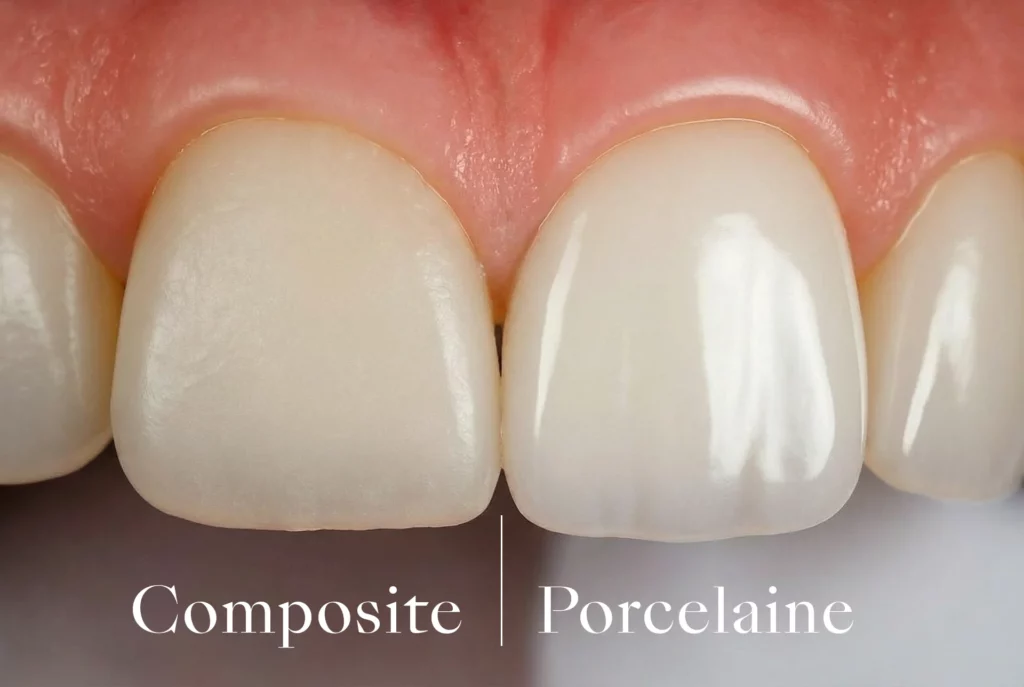
Ceramic is the gold standard material in cosmetic dentistry. Feldspathic ceramic or lithium disilicate veneers (such as IPS e.max) reproduce the translucency and brightness of natural enamel with great fidelity.
Their advantages are numerous: stain resistance (coffee, tea, and red wine do not discolor them), shade stability over time, and high durability. According to a clinical review published in the Journal of Esthetic and Restorative Dentistry, the survival rate of ceramic veneers exceeds 93% at 10 years.
In return, placement generally requires a slight preparation of the enamel (0.3 to 0.5 mm) and two to three appointments, allowing time for the dental technician to manufacture the veneers in the laboratory.
Composite veneers
Composite veneers are crafted directly in the mouth, layer by layer, using a resin sculpted and polymerized by the dentist. This is known as the direct technique.
The main advantage: everything is done in a single appointment. The cost is also lower than that of ceramic. Composite veneers are also reversible, as they require little to no enamel preparation.
On the other hand, composite is more porous than ceramic. It gradually stains upon contact with food dyes and wears out faster. The average lifespan is 5 to 7 years, compared to 10 to 20 years for ceramic.
No-prep veneers (ultra-thin)
No-prep (or “no preparation”) veneers are extremely thin ceramic veneers (0.2 to 0.3 mm) that are bonded directly onto the enamel without any prior grinding.
They are particularly suitable for patients whose teeth are small, slightly spaced, or recessed. However, they are not suitable for all cases, especially when the teeth are already voluminous or forward-leaning, as they would add thickness.
| Criteria | Ceramic | Composite | No-prep |
|---|---|---|---|
| Aesthetic result | Excellent (natural translucency) | Good | Excellent |
| Lifespan | 10 to 20 years | 5 to 7 years | 10 to 15 years |
| Number of sessions | 2 to 3 | 1 | 2 to 3 |
| Enamel preparation | Slight (0.3-0.5 mm) | Minimal or none | None |
| Stain resistance | Very high | Moderate | Very high |
| Repairability | Replacement necessary | In-office touch-up possible | Replacement necessary |
| Price per tooth (Geneva) | CHF 1,000 – 2,000 | CHF 400 – 800 | CHF 1,200 – 2,000 |
Are dental veneers
right for me?
A clinical examination determines the type of veneer suited to your smile
Book an appointment →Price of dental veneers in Switzerland
The price of dental veneers varies according to the chosen material, the complexity of the case, and the number of teeth treated.
In Switzerland, here are the price ranges generally practiced in 2026:
- Composite veneers: CHF 400 to 800 per tooth
- Ceramic veneers: CHF 1,000 to 2,000 per tooth
- No-prep veneers: CHF 1,200 to 2,000 per tooth
For a full smile (8 to 10 teeth), the budget therefore ranges between CHF 3,200 (composite, 8 teeth) and CHF 20,000 (high-end ceramic, 10 teeth).
Veneers are not reimbursed by basic insurance (LAMal) in Switzerland, as they fall under cosmetic dentistry. Some supplementary insurances may cover part of the costs if the placement is medically justified, for example after dental trauma. Check the conditions of your contract.
At DentalGeneva, we provide a personalized quote after a clinical examination. This quote details the cost per tooth, the planned number of sessions, and the recommended material for your situation. Consult our rates page for an overview of our fees.
First consultation with aesthetic examination, digital mock-up, and detailed quote, without obligation
Book an appointment →How does the placement process work?
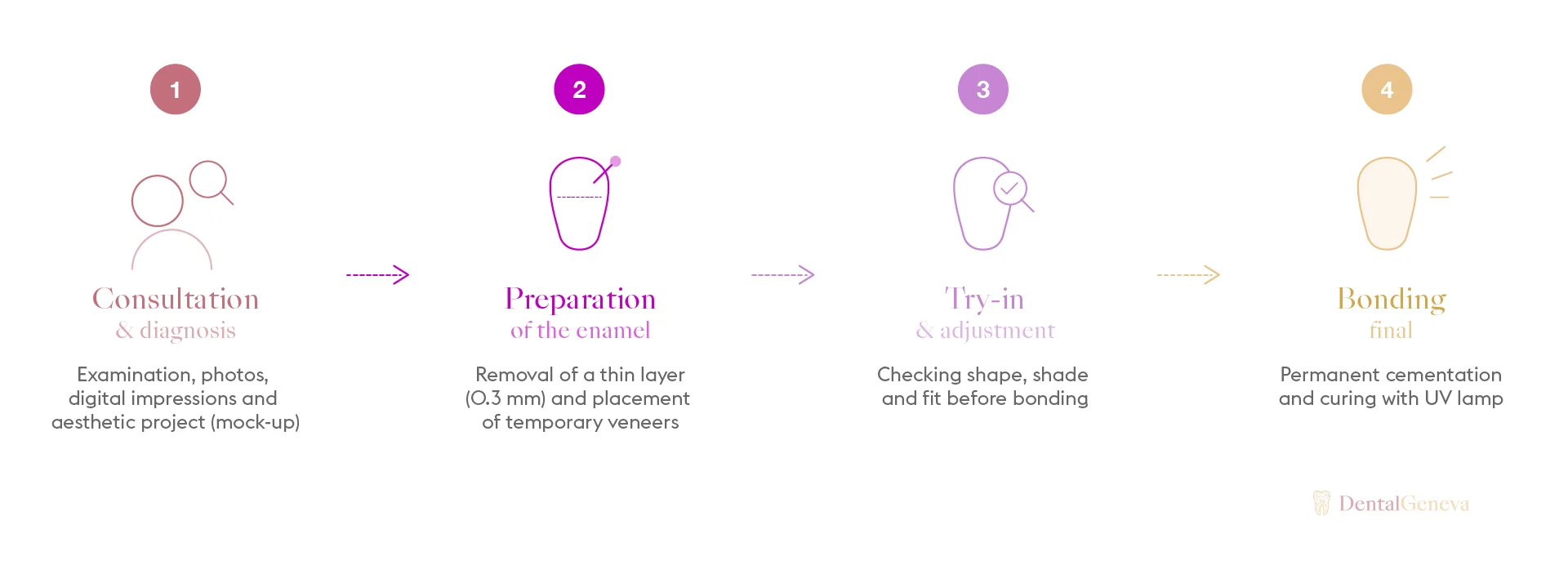
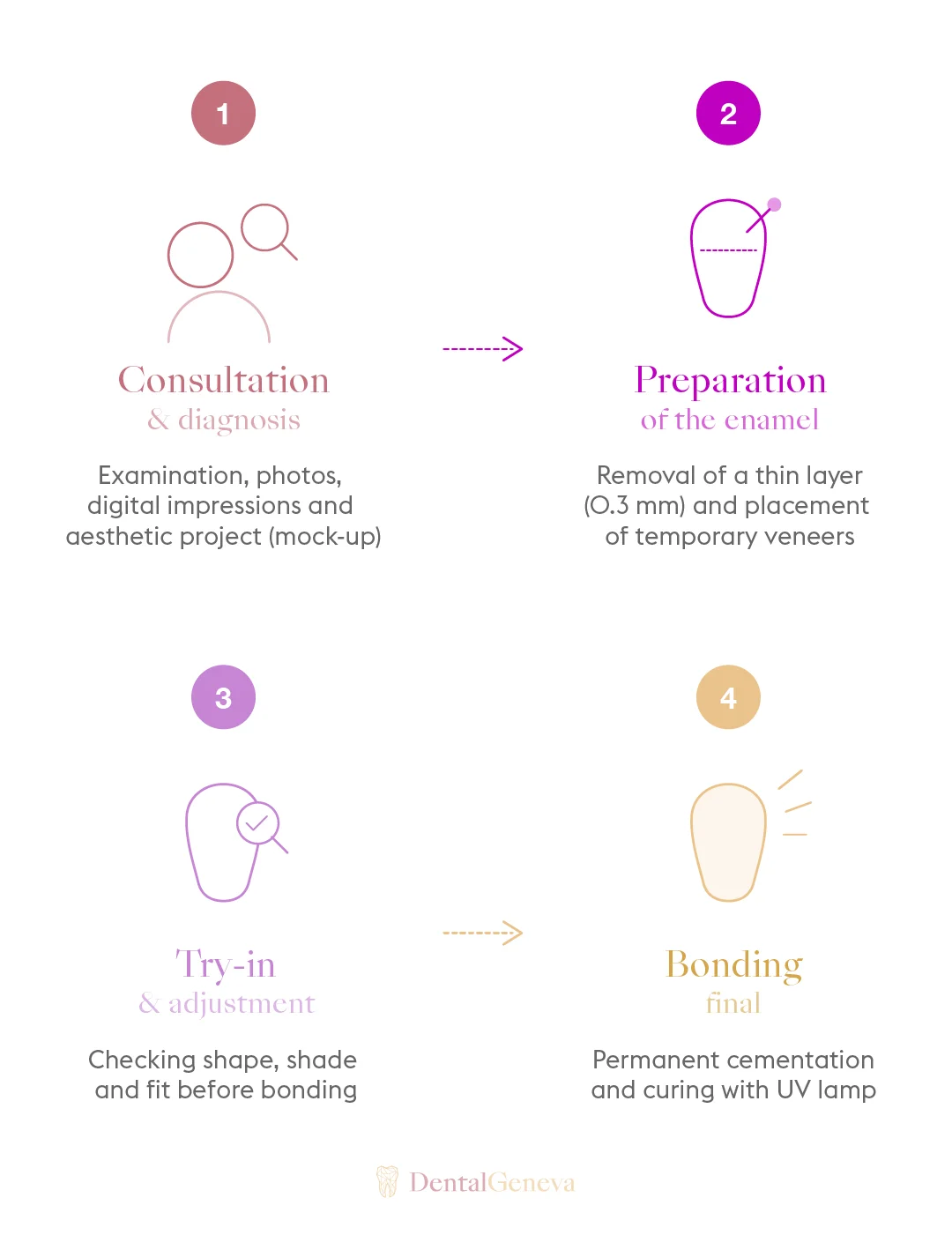
Consultation and diagnosis
During the first appointment, we examine your teeth, take photos, and digital impressions. This is the time to discuss your expectations: what shade do you want? What tooth shape do you like? A digital aesthetic project (mock-up) can be created to show you the expected result before starting.
Tooth preparation
For classic ceramic veneers, a thin layer of enamel (0.3 to 0.5 mm) is removed under local anesthesia. This step is painless. Temporary veneers are placed while waiting for the final veneers to be manufactured in the laboratory.
For composite or no-prep veneers, this step is reduced or eliminated.
Final placement
The ceramic veneers are tried on, adjusted if necessary, and then permanently bonded using a specific resin cement and a light-curing lamp. Bonding is the most critical step: it determines the longevity and hold of the veneers.
For composite veneers, the resin is applied directly, sculpted by hand, and then hardened layer by layer.
Post-placement check
A follow-up appointment is scheduled one to two weeks after placement to check the occlusion (the way your teeth fit together), comfort, and final aesthetics.

Dr. Aurelija Stravinskaité
Dentist, specialized in aesthetic and restorative dentistry. DentalGeneva, central Geneva.
Results and lifespan
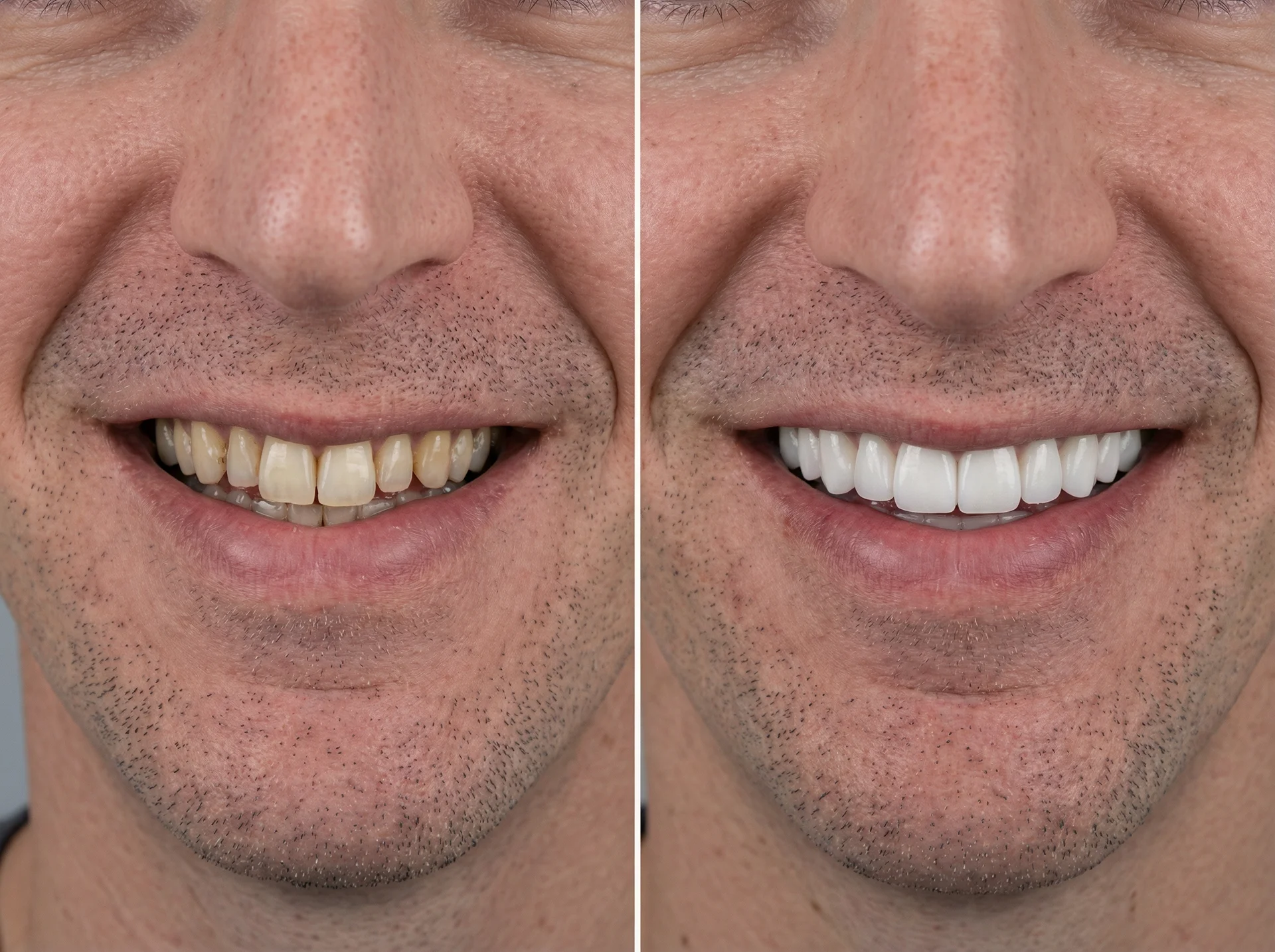
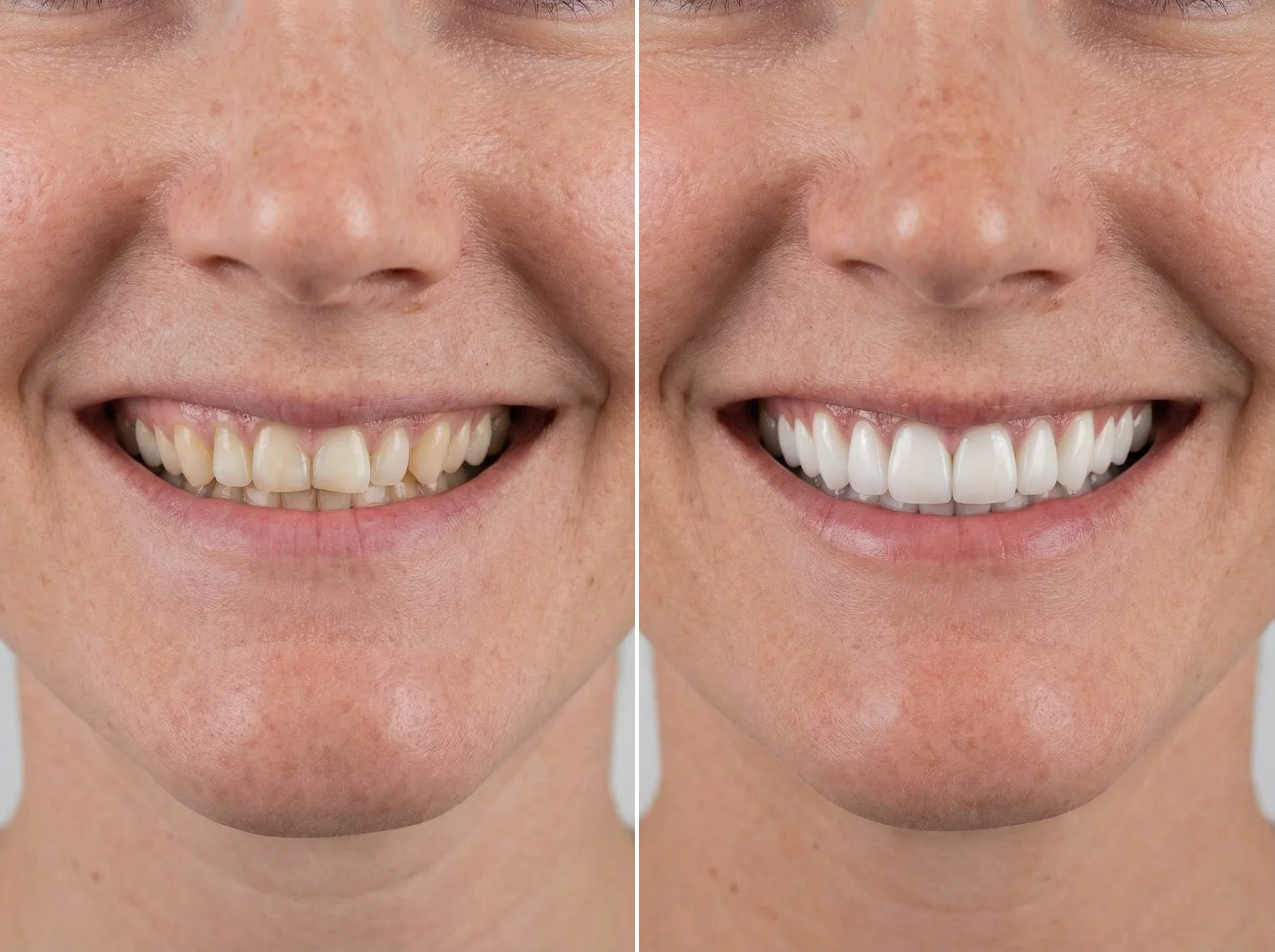
Dental veneers offer visible results immediately after placement. Teeth appear whiter, more regular, and better aligned. It is one of the dental aesthetic treatments with the most favorable result-to-invasiveness ratio.
How long do veneers last?
The lifespan depends on the material and your oral hygiene:
- Ceramic: 10 to 20 years. Clinical studies show a survival rate higher than 93% at 10 years.
- Composite: 5 to 7 years on average, with the possibility of occasional touch-ups.
- No-prep: 10 to 15 years, comparable to classic ceramic.
How to extend the lifespan of your veneers?
A few simple habits make the difference:
- Maintain rigorous oral hygiene: brushing twice a day, daily flossing or water flosser
- Avoid biting into hard objects (ice cubes, pens, nails)
- Wear a night guard if you suffer from bruxism (teeth grinding)
- Perform a scaling and check-up at least once a year
- Limit highly staining foods if you wear composite veneers
Dental veneers: who are they for?
Veneers correct a wide range of aesthetic defects. Here are the most common situations.
Frequent indications
- Stained or yellowed teeth resistant to teeth whitening (deep dyschromia, fluorosis, tetracyclines)
- White spots on the enamel (hypomineralization)
- Chipped or cracked teeth following an impact
- Diastemas (spaces between teeth) that you wish to close without orthodontics
- Slightly misaligned or irregularly shaped teeth
- Worn teeth (erosion, old bruxism)
Contraindications
Veneers are not recommended in certain cases:
- Severe untreated bruxism (risk of veneer fracture)
- Insufficient enamel (the veneer needs healthy enamel to adhere)
- Active periodontal disease (bleeding gums, receding gums): the gums must be treated first
- Insufficient oral hygiene
In these situations, other solutions may be considered: crowns, orthodontics to realign teeth, or prior periodontal treatment. A complete diagnosis determines the best option for your case.
When to consult in Geneva?
If you are considering dental veneers, the first step is a clinical and aesthetic examination at the office. This examination allows for an assessment of your teeth’s condition, a discussion of your expectations, and guidance toward the most suitable type of veneer: ceramic, composite, or no-prep.
At DentalGeneva, we take the time to establish a personalized aesthetic project, with a preview of the result before starting treatment. Each plan is adapted to your dental situation, budget, and goals.